
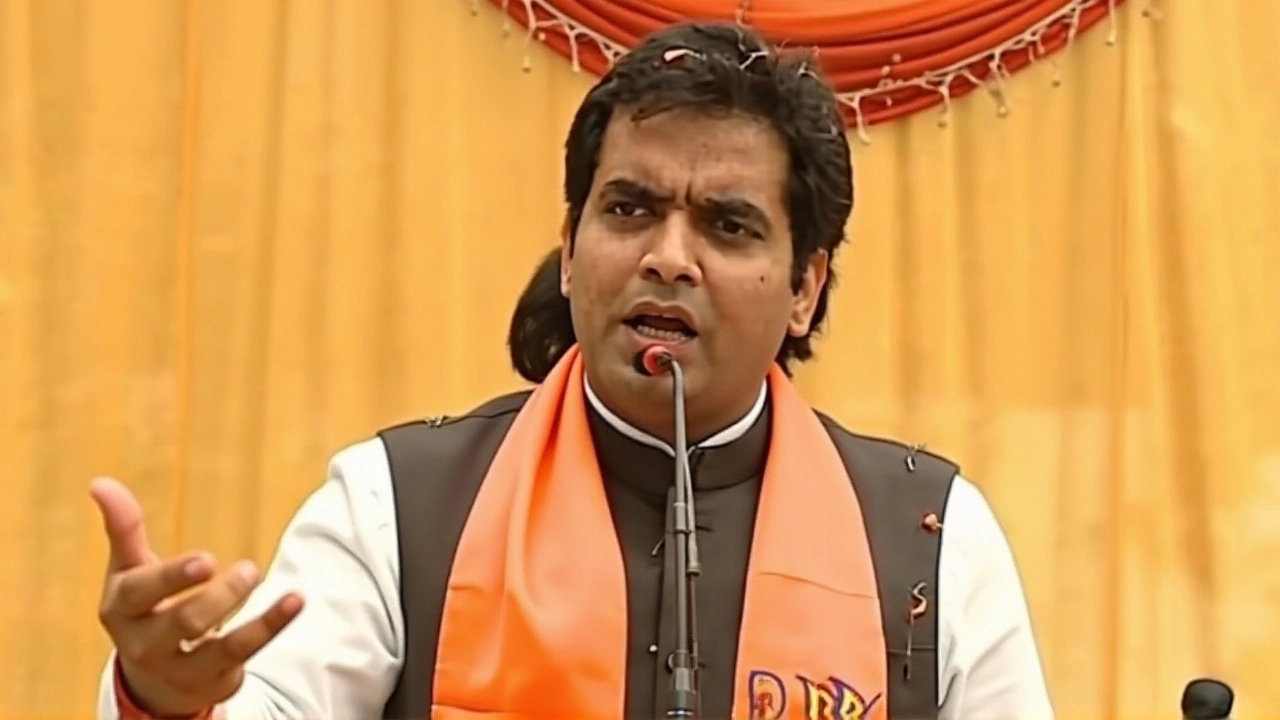
It’s a result that sent shockwaves through West Bengal. In a stunning upset during the Falta constituency re-poll on May 24, 2026, Bharatiya Janata Party (BJP) candidate Debangshu Panda secured a historic victory with a margin of nearly 100,000 votes. The win effectively dismantled the long-standing stronghold of the ruling All India Trinamool Congress (TMC), which finished in a humiliating fourth place.
The re-poll was triggered after allegations of EVM tampering surfaced following the initial voting on April 29, 2026. With 285 booths undergoing fresh voting on May 21, the stakes were incredibly high. But what unfolded wasn’t just a recount—it was a political earthquake.
A Landslide Victory in a TMC Fortress
Falta has been considered a fortress for the TMC since 2011. For years, it was assumed to be untouchable by national parties. Turns out, that assumption was dead wrong. Debangshu Panda polled an impressive 149,666 votes, leaving his closest competitor far behind.
Here’s how the final tally broke down:
- 1st Place: Debangshu Panda (BJP) – 149,666 votes
- 2nd Place: Shambhu Nath Kurmi (CPI(M)) – 40,645 votes
- 3rd Place: Abdur Razzaq Molla (Congress) – ~10,084 votes
- 4th Place: Jahangir Khan (TMC) – ~7,783 votes
The gap between first and second is staggering—over 100,000 votes. To put that in perspective, Panda received more than three times as many votes as the CPI(M) candidate. Meanwhile, the TMC’s vote share collapsed to less than 5% of the total count. It’s not just a loss; it’s an erasure.
The Controversy That Sparked the Re-poll
This wouldn’t have happened without the chaos preceding it. On April 29, 2026, the original election saw a turnout of roughly 86%. However, serious allegations emerged regarding Electronic Voting Machine (EVM) tampering at multiple polling stations. The Election Commission of India stepped in, ordering a re-poll for 285 booths on May 21.
Oddly enough, voter enthusiasm didn’t dip—it surged. Turnout for the re-poll hit 88.13%, slightly higher than the initial poll. This suggests voters were highly engaged and perhaps motivated by the controversy itself. By the end of the 22 rounds of counting, the trend was clear from round one: BJP was dominating.
TMC’s Internal Collapse
But wait—the story gets even stranger. TMC candidate Jahangir Khan had publicly declared on May 19, 2026, two days before the re-poll, that he would not contest the election. He cited a promise from Suvendu Adhikari, who was referred to in reports as promising a special development package for Falta. Note: While Adhikari is currently the Leader of Opposition in the state assembly, some local reports conflated titles or referenced past roles, adding to the confusion.
Despite his withdrawal announcement, Khan’s name remained on the ballot due to procedural rules. Yet, his campaign momentum had clearly evaporated. Finishing last with fewer than 8,000 votes is a stark indicator of internal disarray within the TMC ranks. It signals deep dissatisfaction among the base that once blindly followed party directives.

What This Means for Mamata Banerjee
For Mamata Banerjee, the Chief Minister and TMC supremo, this is another setback. After losing ground in previous elections, seeing a core constituency flip so decisively is damaging. Analysts argue this isn’t an isolated incident but part of a broader erosion of the TMC’s traditional vote bank.
The rise of the BJP in rural and semi-urban pockets of South 24 Parganas indicates shifting allegiances. Voters are no longer swayed solely by regional sentiment. National narratives, welfare schemes, and anti-incumbency against the current administration are playing significant roles.
Broader Political Implications
This result serves as a warning shot to other opposition parties. If the BJP can penetrate such a strong TMC seat with a landslide margin, what does it mean for upcoming by-elections or the next general assembly polls? The CPI(M)’s strong second-place finish also hints at a potential realignment, where left-leaning voters might pivot toward the BJP if they perceive the TMC as weak or corrupt.
Furthermore, the high voter turnout in the re-poll demonstrates that citizens care deeply about electoral integrity. When institutions respond to grievances, participation increases. This could set a precedent for future disputes across India.
What’s Next?
Expect intense scrutiny from the Election Commission regarding the EVM allegations. Transparency measures may be tightened for future polls. Politically, the BJP will likely use this victory to bolster its campaign narrative, while the TMC faces urgent questions about leadership and strategy. Can Mamata Banerjee rebuild trust in her backyard? Only time will tell.
Frequently Asked Questions
Why was a re-poll conducted in Falta?
A re-poll was ordered by the Election Commission of India due to credible allegations of EVM tampering and irregularities during the initial voting on April 29, 2026. A total of 285 polling booths were affected, prompting fresh voting on May 21, 2026, to ensure fair results.
Who won the Falta re-poll and by what margin?
Debangshu Panda of the Bharatiya Janata Party (BJP) won the Falta re-poll with 149,666 votes. He defeated the second-place candidate, Shambhu Nath Kurmi of the CPI(M), by a massive margin of approximately 109,000 votes, marking a historic shift in the constituency’s political landscape.
Why did the TMC perform so poorly in this election?
The TMC’s performance collapsed due to multiple factors, including internal dissent, the public withdrawal of their candidate Jahangir Khan before the re-poll, and growing anti-incumbency. Finishing fourth with only ~7,783 votes highlights a severe disconnect between the party leadership and its traditional voter base in Falta.
How does this affect Mamata Banerjee’s political standing?
This loss is a significant blow to Mamata Banerjee, as Falta was considered a TMC stronghold since 2011. The decisive defeat suggests weakening support in key regions and raises questions about the party’s ability to retain power in future elections without addressing underlying voter dissatisfaction.
Was voter turnout different in the re-poll compared to the original election?
Yes, voter turnout actually increased. The initial election on April 29 saw an 86% turnout, while the re-poll on May 21 recorded an even higher 88.13% turnout. This indicates heightened civic engagement and possibly greater motivation among voters to participate in the corrected electoral process.