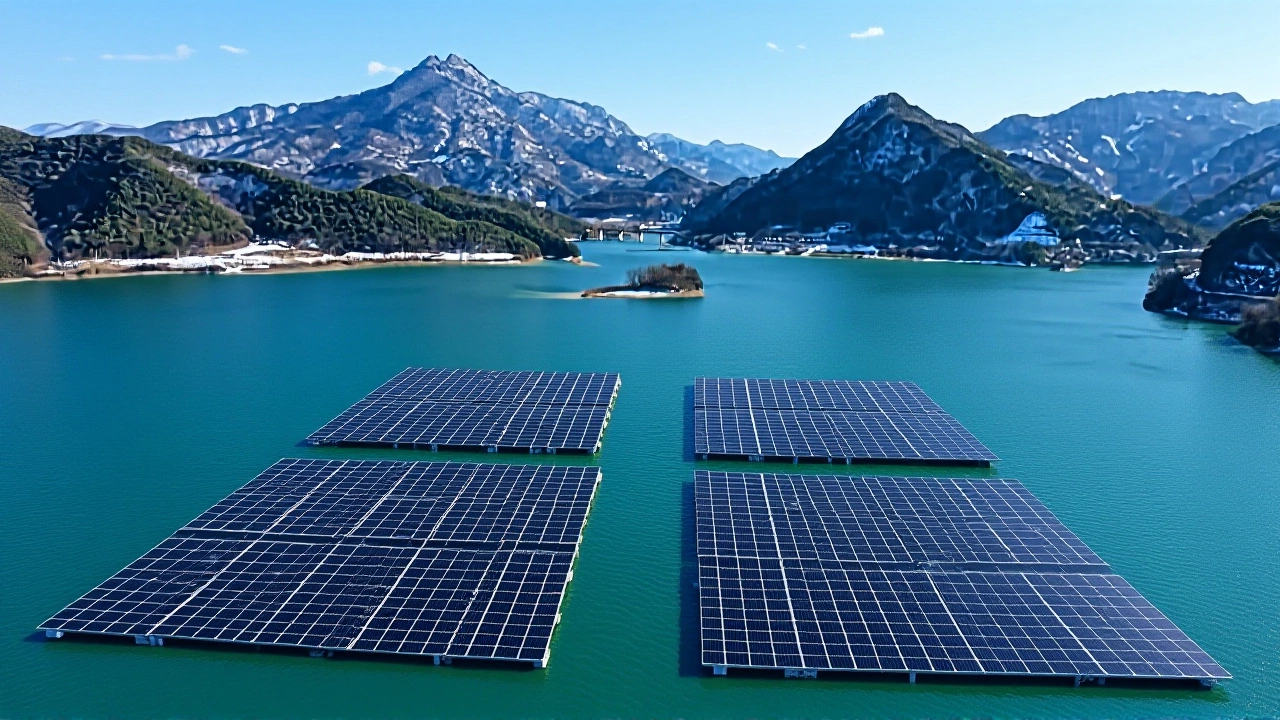
When M.K. Stalin, Chief Minister of Tamil Nadu, inaugurated the country’s largest floating solar plant on March 10, 2022, it wasn’t just a ribbon-cutting ceremony. It was a signal that India is ready to turn its vast reservoirs into power stations. The project, built at a cost of ₹150 crore (approx. $18 million), sits atop water where land is scarce and expensive. Here’s the thing: this isn’t an isolated experiment anymore. It’s the beginning of a massive shift in how South Asia generates clean energy.
The twist is that while rooftop solar has dominated headlines for years, floating photovoltaic (FPV) systems are solving two problems at once: land scarcity and water conservation. By covering reservoir surfaces, these panels reduce evaporation—a critical benefit in drought-prone regions—while the cooling effect of the water boosts panel efficiency by up to 15% compared to ground-mounted systems.
Major Players Driving the Expansion
The backbone of this movement is public sector investment. National Thermal Power Corporation (NTPC), India’s largest integrated energy company, kicked off its flagship 25-megawatt (MW) project at the Simhadri Thermal Power Station reservoir in Andhra Pradesh back in August 2021. This installation features over 100,000 solar PV modules spread across the water surface.
But the scale is ramping up quickly. In January 2022, another state-owned giant, National Hydroelectric Power Corporation (NHPC), signed agreements in the eastern state of Odisha to develop a massive 500 MW floating solar facility. The initial phase involves investing over ₹2,000 crore (approx. $240 million) into 300 MW of projects. These aren't small pilots; they are grid-scale operations designed to power thousands of homes.
G. Lakshmi, Commissioner of the Greater Visakhapatnam Municipal Corporation, highlighted the practical impact in Andhra Pradesh. The Meghadridgeda reservoir plant, spread across 12 acres, can generate 4.2 million units of electricity annually. That’s enough to keep lights on in roughly 7,000 households year-round.
The Numbers Behind the Potential
The gap between current capacity and potential is staggering. According to the World Bank, India holds a potential floating solar capacity of 280–300 gigawatts (GW). Right now? Only about 170 MW is operational, with another 1.8 GW in various stages of development. To put that in perspective, global floating solar production has grown from just 10 MW to 77 MW in recent years, while traditional ground-based solar exceeds 1,000 GW worldwide.
Council on Energy, Environment and Water (CEEW) data shows Maharashtra leading the charge domestically. Its reservoirs cover 3,173 square kilometers, capable of generating 57.9 GW of energy. If fully utilized, floating solar could meet 50% of electricity demand at hydropower dams globally, according to World Bank estimates.
Global Context and Technological Edge
It’s not just happening in India. Germany has developed advanced floating plants using 2,600 modules that capture morning and evening light, not just midday sun. One such plant produces 2,000 megawatt-hours annually, supplying two-thirds of a quarry’s power needs. Currently, it operates at a peak capacity of 5 MW.
In South Asia, while India leads, neighbors like Maldives and Bangladesh have launched pilot projects, whereas Pakistan and Sri Lanka remain in early exploratory phases. The technology allows for longer generation hours and higher efficiency due to the natural cooling of the water beneath the panels.
Challenges and the Road Ahead
Here’s the catch: floating solar is still more expensive than ground-mounted systems. Manufacturing capacity for specialized buoyant structures is limited, and regulatory standards for certification are still evolving. The World Bank recommends setting clear targets, mapping viable sites, boosting domestic manufacturing of floating components, and investing in feasibility studies.
However, as costs drop and technology matures, India is poised to become a global guidepost. The goal is ambitious: reach 500 GW of renewable energy capacity by 2050, aiding the net-zero carbon target by 2070. With states like Madhya Pradesh, West Bengal, Kerala, Telangana, Bihar, and Rajasthan already hosting installations, the blueprint is being drawn in real-time.
Frequently Asked Questions
How does floating solar help conserve water?
Floating solar panels cover the surface of reservoirs, significantly reducing water evaporation. This is crucial in arid regions or during droughts, as it preserves water resources for irrigation and drinking while simultaneously generating electricity.
What is the total potential capacity for floating solar in India?
According to the World Bank, India has a potential floating solar capacity of 280–300 gigawatts. Currently, only about 170 megawatts are operational, indicating massive room for growth and investment in the sector.
Which companies are leading floating solar projects in India?
National Thermal Power Corporation (NTPC) and National Hydroelectric Power Corporation (NHPC) are key players. NTPC launched a 25 MW plant in Andhra Pradesh, while NHPC signed deals for a 500 MW facility in Odisha, demonstrating strong public sector commitment.
Why is floating solar more efficient than ground-mounted solar?
Water acts as a natural coolant for solar panels, preventing them from overheating. This thermal regulation can boost energy conversion efficiency by up to 15% compared to land-based systems, which often suffer performance drops in high heat.
What are the main challenges facing floating solar adoption?
Higher initial costs compared to ground solar, limited manufacturing capacity for specialized floating structures, and a lack of standardized regulatory certifications are primary hurdles. However, economies of scale are expected to lower costs over time.